

Because we can’t take away their grief, but we can help them feel safe, supported and connected.
Following the incredible response to my first free resource, Your Child’s Emotional Toolkit, I’ve been working on something that feels particularly close to my heart.
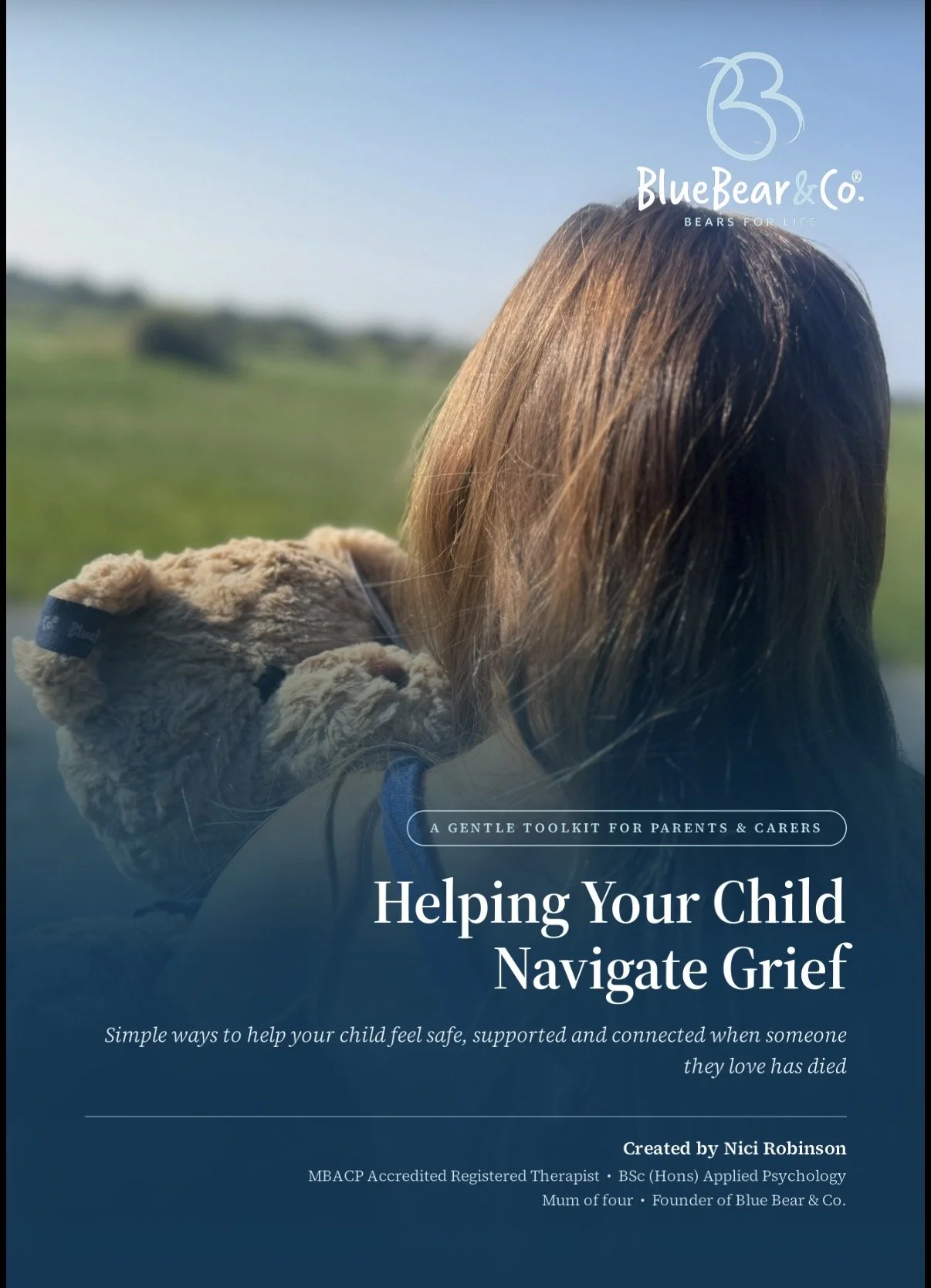
Today, I’m sharing my latest resource, Helping Your Child Navigate Grief, a free 36-page guide created to support parents and carers when a child is grieving the death of someone they love.
It’s a resource that brings together two very different, but deeply connected, parts of my life: my professional experience as a therapist and my personal experience as a bereaved mum.
And it’s one I wish I’d had when we lost Charlie.
When professional knowledge meets personal experience
For over 17 years, I’ve worked as a therapist, supporting children, young people and adults through some of life’s most difficult experiences.
I’ve spent years helping families understand emotions, navigate loss and find ways to cope when life feels overwhelming.
But in April 2021, when our beautiful boy Charlie died aged just five, following a brain tumour diagnosis, everything I thought I understood about grief became deeply personal.
Suddenly, I wasn’t just a therapist who understood the importance of emotional expression, reassurance and connection.
I was a mum trying to navigate my own grief whilst supporting my other children through theirs.
I learnt something incredibly important…
Knowing what might help doesn’t necessarily make it any easier to put into practice when your own world has fallen apart.
There were moments when I knew exactly what I might say to another parent, but struggled to find those same words for myself or my children.
It’s one of the reasons I’ve felt so passionate about creating this guide.
Children don’t grieve in the same way adults do
One of the things I really wanted to explore in this resource is how differently children can experience grief.
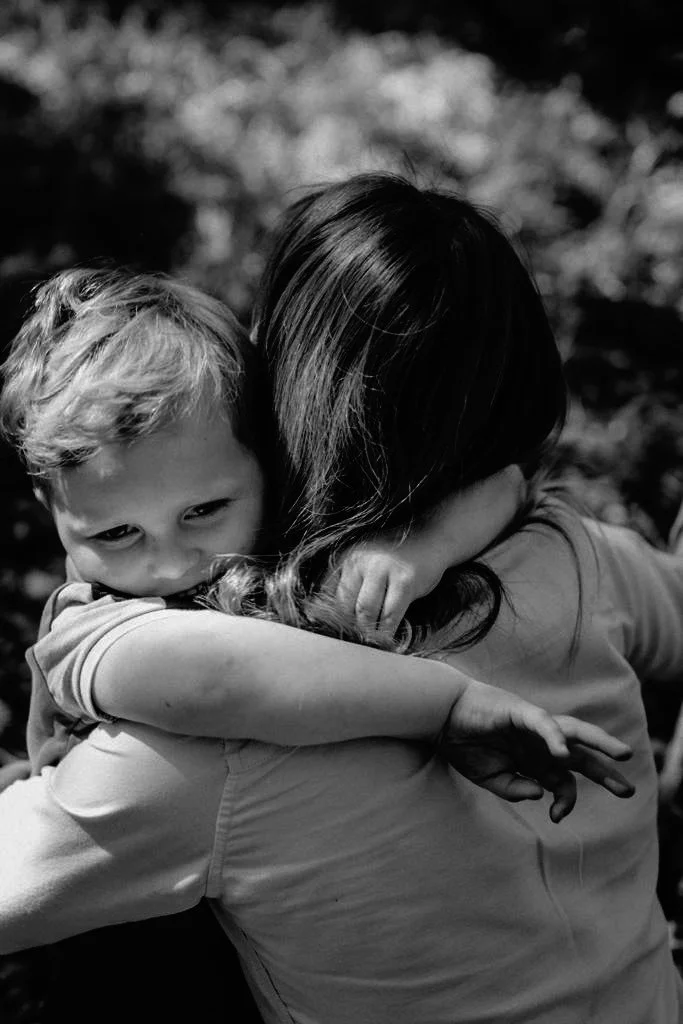
A child might ask a heartbreaking question one moment and be laughing, playing or asking what’s for tea the next.
They might become clingy, angry, withdrawn or anxious. They might want to talk constantly about the person who has died, or not want to talk about them at all.
And sometimes, they might appear completely unaffected.
None of these responses necessarily means they’re grieving more or less than another child.
Children often move in and out of their grief, experiencing difficult feelings in smaller moments before returning to familiar activities.
And something I think is especially important to remember is that children still need permission to be children.
They need to know that it’s okay to laugh, play, enjoy birthdays, make new memories and look forward to things, even whilst missing someone they love.
Happiness and sadness can exist alongside each other.

What’s inside the free guide?
I’ve tried to make this resource as practical, accessible and reassuring as possible.
Inside, you’ll find guidance on:
Understanding how children experience grief at different ages, from babies and toddlers through to teenagers.
Supporting children following the death of a brother or sister.
Finding honest, age-appropriate words to talk about death and answer difficult questions.
Helping children express emotions such as sadness, anger, worry and guilt.
Supporting children at school and navigating birthdays, anniversaries and other significant occasions.
Creating opportunities for remembrance through memory boxes, photographs, stories and meaningful activities.
Using simple sensory and grounding techniques when emotions feel overwhelming.
Recognising when your child might benefit from additional professional support.
Finding trusted bereavement organisations and further sources of help.
I’ve also included suggestions for books, creative activities and simple conversations that may help you connect with your child when words feel difficult to find.
You don’t need to read the guide from beginning to end. You can dip into the sections that feel relevant to your family, whenever you need them.

Why remembering and connection matter so much
One of the most personal sections of the guide is about continuing our connection with someone who has died.
Something I’ve learnt since losing Charlie is just how much it means when somebody says his name.
Sometimes people worry that mentioning someone who has died will make us sad.
But hearing Charlie’s name doesn’t remind me that he’s died. I never forget that.
It reminds me that he lived.
That he was here. That he was loved. That he will always be part of our family.
Our youngest daughter, Olivia, never had the opportunity to meet her big brother, but she’s growing up knowing him through photographs, stories, memories and the sound of his voice in her beloved Brown Bear.
And that’s something I feel incredibly grateful for.
Connection doesn’t have to end when someone dies. Sometimes it simply takes a different form.
It’s also at the heart of why I created Blue Bear & Co., and why our bears have been thoughtfully designed to offer opportunities for comfort, reassurance and connection.
When we lost Charlie, I found myself desperately wanting anything that could help me feel close to him. His fingerprint on a necklace, a cast of our hands intertwined, a teddy bear that could hold the sound of his voice and his familiar scent. These weren’t simply keepsakes. They were tangible connections to my little boy, things I could hold onto when I could no longer hold him.
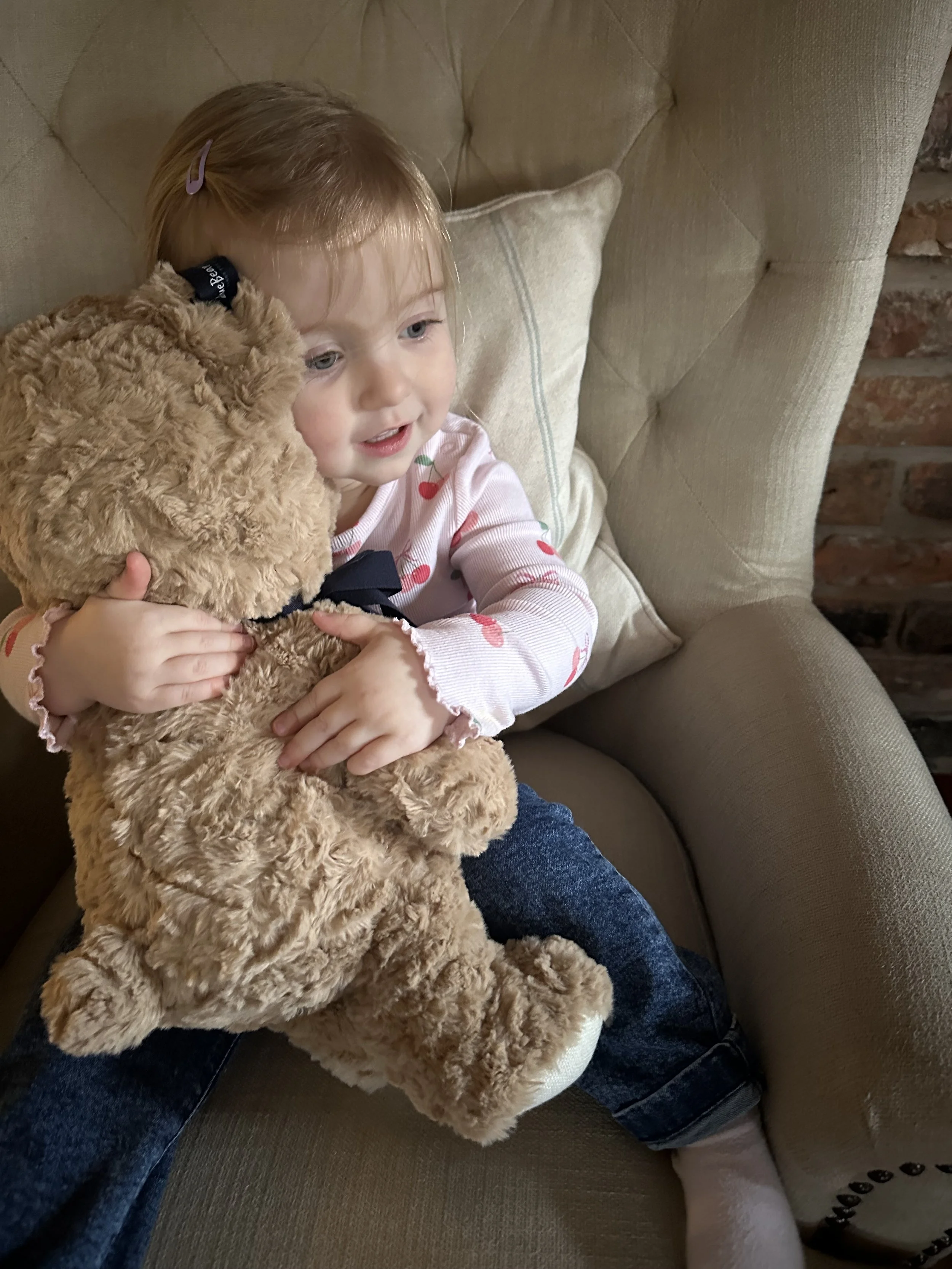
And whilst these precious keepsakes have brought me enormous comfort, I also recognise that connection can be found in the simplest of things. A photograph, a familiar blanket, a favourite teddy, a shared memory or simply sitting together and talking about someone we love.
It’s not about the object itself, but the love, memories and connection it represents.
What about the parents who are grieving too?
This was another section I felt was particularly important to include.
Because when a family experiences a bereavement, parents are often trying to manage their own grief whilst doing everything they can to protect and support their children.
And that can feel incredibly overwhelming.
I want parents to know that they don’t have to have all the answers.
You don’t have to get every conversation right.
You don’t have to hide every tear.
And you certainly don’t have to be strong all the time.
Our children need to know they’re loved, that their feelings matter and that they aren’t responsible for fixing ours.
Sometimes we’ll find the right words. Sometimes we’ll cry together. Sometimes we’ll laugh at a memory.
Sometimes simply being there is enough.
Why I’ve made this resource free
The response to Your Child’s Emotional Toolkit has been so encouraging and it’s reinforced just how important accessible emotional wellbeing resources can be for families.
I believe that every parent and carer deserves access to clear, compassionate information, particularly when they’re facing something as difficult as bereavement.
I also recognise that not every family will need this guide today.
But grief touches so many lives and having something to turn to when those difficult moments arise can make a real difference.
That’s why I’ve chosen to make Helping Your Child Navigate Grief completely free to download.
There is no obligation to purchase anything or make a contribution.
My hope is simply that it reaches the families who might find it helpful.
Download your free guide
If you’re supporting a child through grief, or you’re a teacher, therapist, healthcare professional or someone who works with children and families, I really hope this resource offers something useful.
If you know somebody who might benefit from it, please consider sharing it with them.
Sometimes we can’t change what a family is going through.
We can’t take away their sadness or find the perfect words to make everything better.
But we can help children feel understood, supported and connected to the people they love.
And sometimes, that can mean more than we realise.
With love,
Nici xx ♡
Charlie’s mum
MBACP Accredited Registered Therapist
Founder of Blue Bear & Co.