



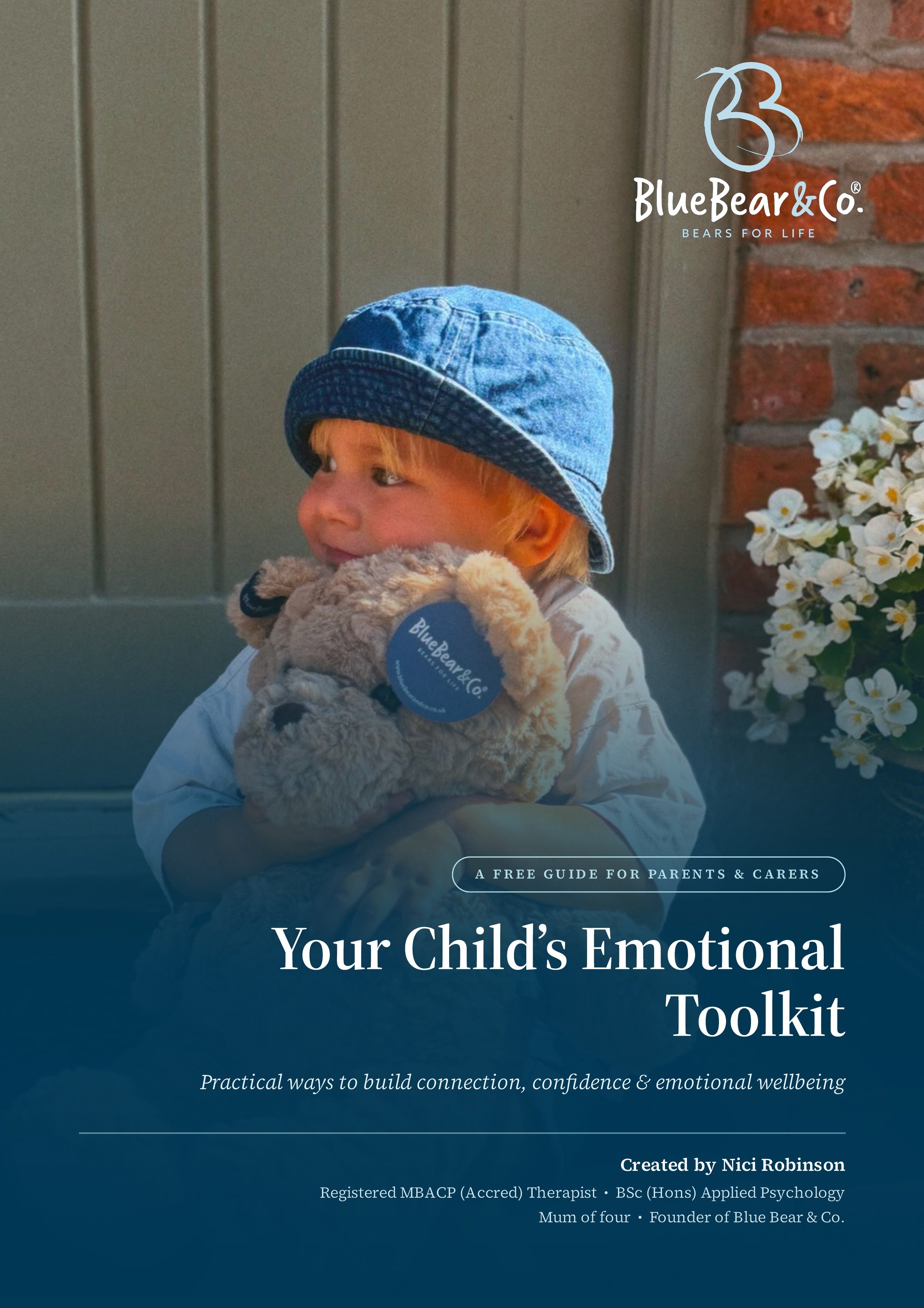
Your Child's Emotional Toolkit
Practical ways to build connection, confidence and emotional wellbeing, from a therapist and mum of four.
Registered MBACP (Accred) Therapist • 17 years' experience
You don't need to have all the answers
When your child is struggling, it's natural to want to find the perfect words or make difficult feelings disappear. But children don't always need us to fix things. Sometimes they simply need to know:
I see you.
I hear you.
I'm here.I've created this free toolkit to give you simple, practical ideas you can use in everyday family life, whether it's a big worry, a wobbly bedtime or one of life's harder moments.
FOR PARENTS & CARERS

18 PAGES OF PRACTICAL IDEAS
What’s Inside
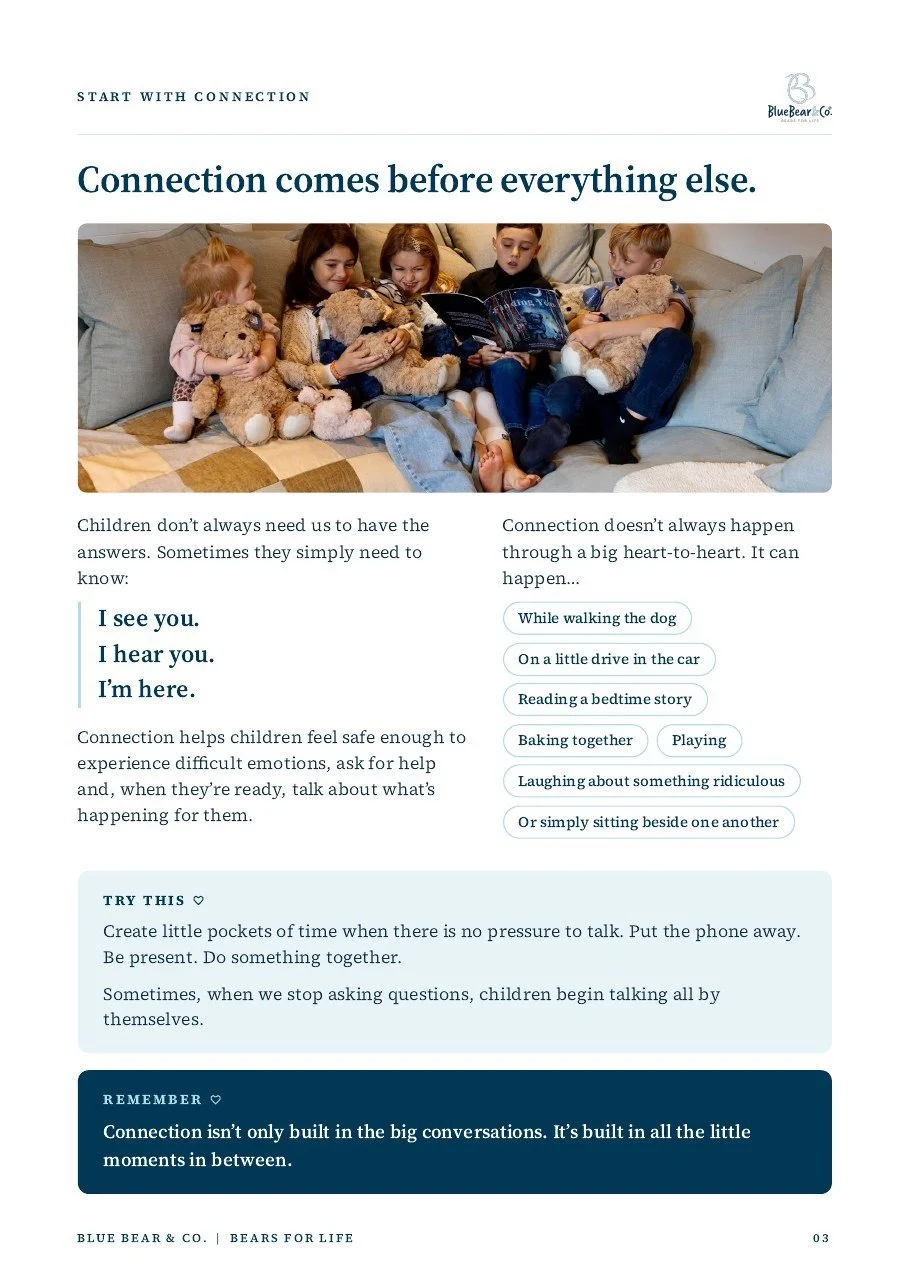
Connection first
Why the little everyday moments matter more than the big heart-to-hearts.
Building confidence
How to support your child to try, without doing it for them.
Understanding feelings
Gentle ways to help your child name what they feel and where they feel it.
Tools for every age
Ideas for ages 2–5, 6–11 and 12+, because what helps changes as they grow.
Grounding & breathing
Simple, playful sensory and breathing ideas for when feelings get big.
Supporting a grieving child
Honest, gentle guidance and meaningful ways to remember someone they love.
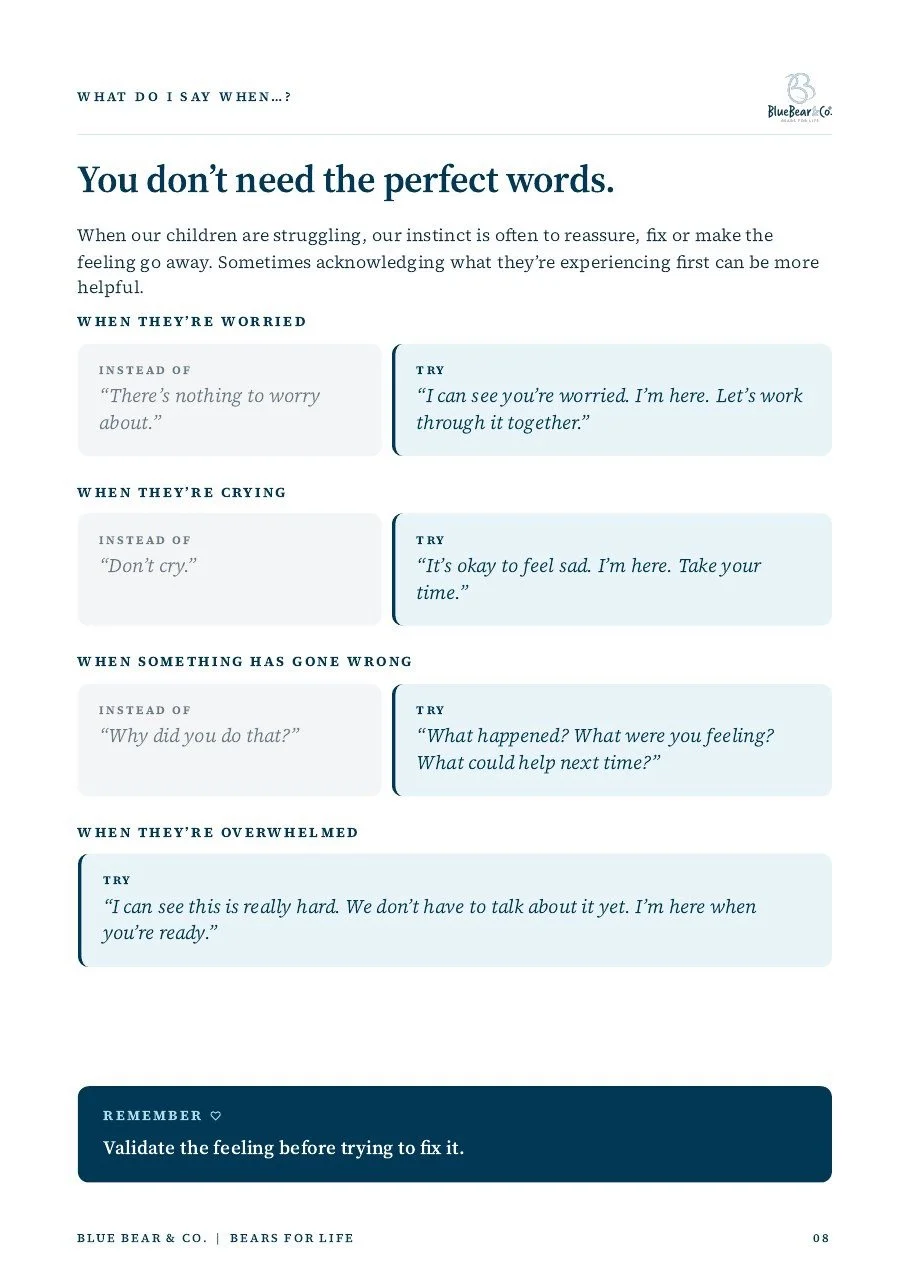
What do I say when…?
What to say instead of "Don't cry" or "There's nothing to worry about".
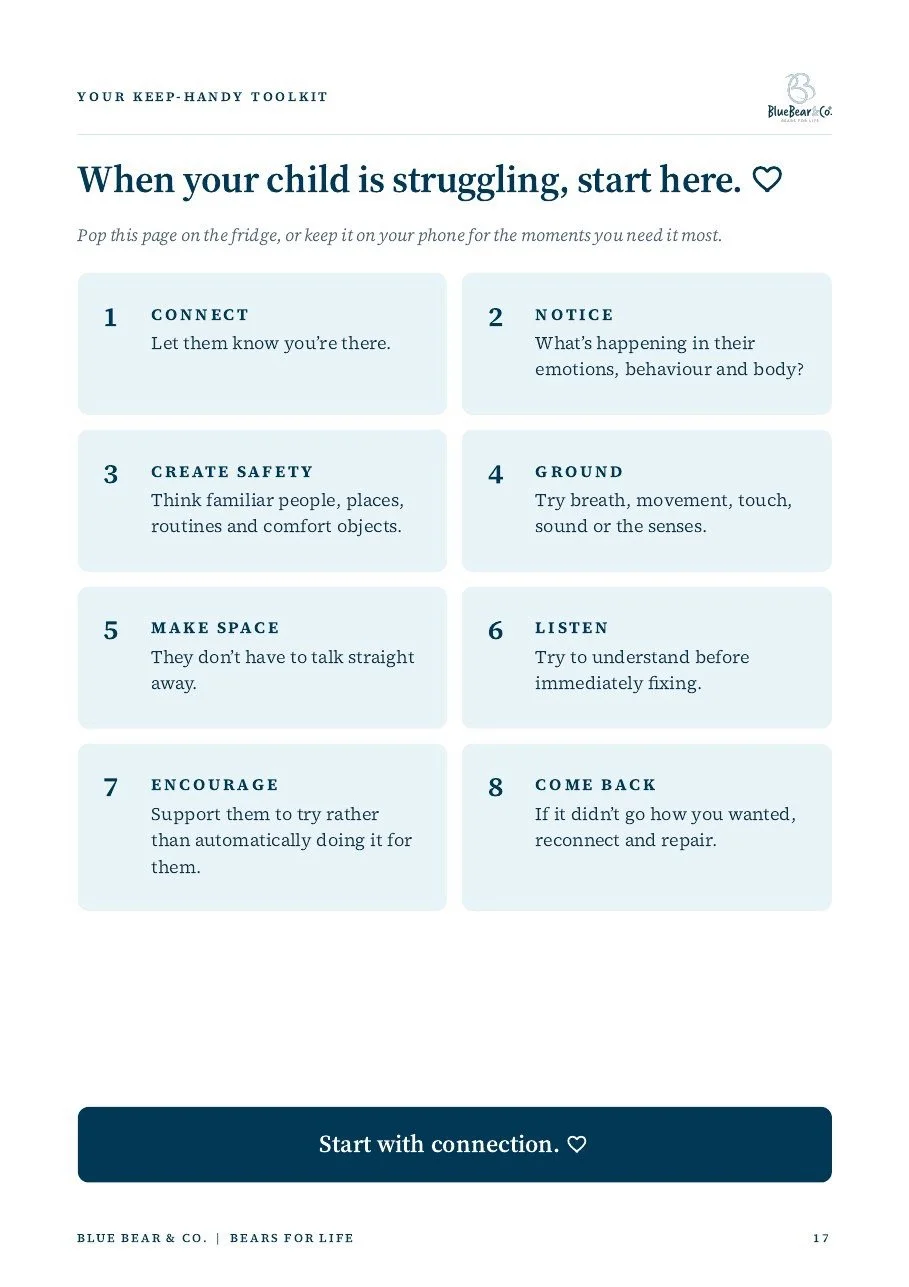
Your keep-handy toolkit
A one-page reminder to pop on the fridge for the moments you need it most.

FROM THE TOOLKIT
"Sometimes children need to borrow our calm before they can find their own."
"Validate the feeling before trying to fix it."
"Connection doesn't require perfection."

Get your FREE Emotional Toolkit
By signing up, you'll receive your free toolkit plus occasional emails from Blue Bear & Co. with gentle tips, resources and news. You can unsubscribe at any time.

MEET THE THERAPIST BEHIND THE TOOLKIT
Hi, I’m Nici
I'm a Registered MBACP Accredited Therapist with a BSc (Hons) in Applied Psychology and 17 years' experience supporting children, young people and adults. I'm also a mum of four and the founder of Blue Bear & Co.
After losing my son Charlie, I combined my personal experience of grief with my professional experience as a therapist to create bears designed to bring comfort and connection when families need it most.
This toolkit brings together some of the simple, practical ideas I've learnt both professionally and as a parent. Take what feels helpful for your child, and leave the rest.



This toolkit is for you if…
♡ You want simple, practical ways to support your child's feelings
♡ Your child is facing worry, big emotions, change or loss
♡ You sometimes wonder, "What do I say?"
♡ You want to build connection, not just manage behaviour
♡ You're a grandparent, carer, teacher or anyone who cares for children

Start with connection.
You don't need every tool. You don't need to have all the answers. And you definitely don't need to get it right every time.
This resource provides general information and practical ideas to support children's emotional wellbeing. It is not a substitute for individual therapeutic, psychological or medical advice. If you have concerns about your child's wellbeing or safety, please seek advice from an appropriate professional or service.